
Reading the Room: Tone and Volume in Everyday Conversations
Have you ever been told you were too loud in a quiet setting, or too flat and monotone in a conversation that called for more energy? Maybe someone told you that you seemed bored when you were actually very interested, or that you came across as intense when you were just being yourself. If any of that sounds familiar, you are not alone, and it is not a personal flaw.
For many autistic people, matching the tone and volume of their voice to the social environment around them is a genuinely difficult skill. Not because they do not care, and not because something is wrong with them, but because the brain processes the cues that guide this kind of adjustment differently. This article explains what is going on, why it matters, and most importantly, what can help.

What Is Prosody, and Why Does It Matter?
The word prosody refers to the musical qualities of speech, things like pitch, volume, rhythm, and the rise and fall of your voice as you talk. Prosody is separate from the words you choose. It is the how of speaking, not just the what. When you ask a question, your voice typically rises at the end. When you are excited, your speech gets faster and louder. When you are in a library, you instinctively lower your volume. These adjustments happen automatically for many people, but for autistic individuals, they often require conscious effort.
Research consistently finds that autistic people show differences in expressive prosody, including patterns in pitch range, volume, and speech rate that can come across as atypical to non-autistic listeners (Asghari et al., 2021). A large-scale meta-analysis found that autistic speakers, on average, exhibit higher mean pitch, greater pitch variability, and longer voice duration than non-autistic peers, features that can affect how others perceive the emotional tone of a conversation (Asghari et al., 2021).
What makes this more complicated is that prosody also plays a role in how we receive and interpret what others are saying. A comprehensive review of linguistic prosody in autism found that differences show up in both the production and the perception of these vocal cues, meaning that autistic people may find it harder not only to match their own voice to the room, but also to pick up on the subtle vocal signals others use to indicate things like sarcasm, urgency, or emotional closeness (Grice et al., 2023).
It Is Not About Caring More—It Is About Processing Differently
One of the most important things to understand is that difficulties with vocal tone and volume in autism are not signs of rudeness, indifference, or social laziness. They reflect genuine differences in how the autistic brain processes social information. Vocal modulation, the ability to adjust pitch and volume fluidly in response to a social setting, is a neurologically complex skill that depends on picking up and interpreting subtle environmental and relational cues in real time.
Autistic people are also more likely to experience sensory processing differences that affect how they hear and respond to their auditory environment (Narzisi et al., 2025). Someone who is managing sensory overload from background noise, bright lights, or a crowded room may have fewer cognitive resources available to monitor and adjust their own voice simultaneously. What looks, from the outside, like poor volume control may actually reflect a nervous system already working very hard to stay regulated.
It is also worth noting something that research increasingly supports: communication difficulties between autistic and non-autistic people are not one-sided. The double empathy problem reminds us that misunderstandings go both ways, and that non-autistic people can have just as much difficulty reading and interpreting autistic communication styles as autistic people have with theirs (Milton, 2012). Tone and volume differences are a real challenge, but they are a mismatch—not a moral failure.
What "Reading the Room" Actually Requires
When non-autistic people talk about reading the room, they usually mean picking up on unspoken social signals: the energy in the space, the mood of the people around you, the level of formality, and how closely others are matching each other's vocal style. For autistic individuals, these signals may not register automatically or may require deliberate attention to notice.
Breaking it down into concrete, observable questions can make the process more accessible. Instead of trying to sense the abstract mood of a room, you can learn to look for specific, concrete cues. Before or during a conversation, consider:
How loud are other people speaking? Are they using a hushed voice, a normal conversation volume, or a raised voice?
What is the setting? A library, a party, a classroom, a one-on-one conversation, and a sports game all call for different vocal registers.
How is the other person's body positioned, and what expression do they have? Leaning in and speaking softly usually signals that the conversation is private or sensitive.
Is the topic serious, casual, or somewhere in between? Topics like grief, conflict, or personal struggles typically call for a softer, slower vocal approach.
These are not foolproof rules, and social situations are often ambiguous. However, having a checklist of observable cues to look for, rather than trying to feel the room, gives you a concrete starting point that does not require you to read between the lines.
Volume: A Practical Framework
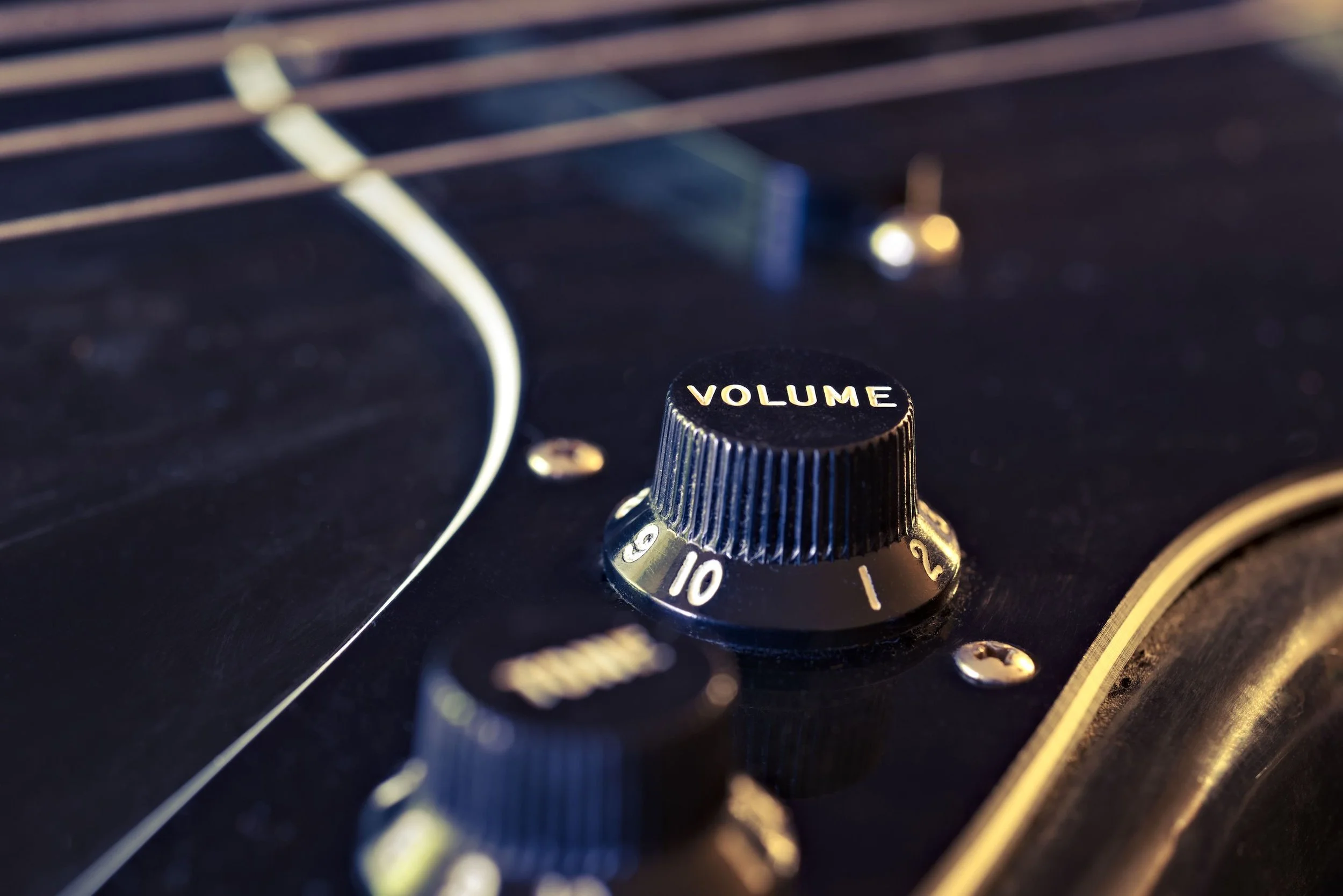
Volume is often the most immediately noticeable prosodic feature in social settings. Many autistic people find it helpful to use a concrete, numbered scale as a reference point. A simple 1–5 voice scale might look like this:
Voice 1 (Whisper): Library, sleeping baby nearby, confidential conversation
Voice 2 (Quiet): Classroom, doctors office, someone who seems upset
Voice 3 (Normal): Most everyday conversations with friends, family, or coworkers
Voice 4 (Raised): Loud restaurant, calling across a room, upbeat group setting
Voice 5 (Loud): Outside, sports event, crowd noise where you genuinely need to be heard
This kind of framework is not about policing yourself—it is about giving yourself a concrete tool to anchor an otherwise abstract social expectation. Some people find it useful to check in with the scale at the start of a new social environment and again if they notice people reacting to their volume.
Tone: Expressing Yourself Without Losing Your Voice
Tone is trickier than volume because it is both about how others perceive your emotional expression and about whether your voice accurately conveys what you are feeling inside. Many autistic people find that their inner emotional experience is much richer than their tone of voice suggests. They may feel genuinely excited, sad, or enthusiastic, but their voice comes out flat or monotone. This disconnect is real and can lead to misunderstandings, with others thinking you are disengaged when you are not.
Research on prosody interventions for autistic people suggests that deliberate practice in vocal expressiveness, including exercises focused on pitch variation, pacing, and emphasis, can meaningfully improve how well a speaker's voice matches their intended emotional message (Wiklund, 2023). This is not about becoming someone you are not. It is about developing a wider range of vocal tools so that when you do feel something, your voice can show it if you want it to.
Some practical strategies that can help with tone include:
Recording yourself and listening back. Many people are surprised to hear how their voice actually sounds versus how it feels from the inside. It is not about criticism; it is information.
Practicing with trusted people. Role-playing different scenarios, giving good news, expressing concern, disagreeing politely, with a friend, family member, or therapist, can help you build fluency in a safe setting.
Matching a verbal cue to an emotional state. For example, deliberately making your voice slightly slower and softer when someone shares something sad, or letting a little more energy into your pitch when you genuinely are excited.
Using words to fill the gap. When tone is hard to adjust in the moment, you can use explicit language to carry the emotional information: "I am really interested in this," or "I want you to know this is serious to me."

Staying Authentic While Adapting
There is an important difference between developing communication skills and masking who you are. Masking, suppressing, or hiding autistic traits to fit in has been linked to significant mental health costs and emotional exhaustion (Pearson & Rose, 2021). The goal of working on tone and volume is not to erase your natural communication style. It is to add flexibility, so that you have more options available when you need them.
Think of it less like performing a character and more like learning to drive in different conditions. You might drive differently on a highway, in a school zone, or in a parking lot, not because your identity as a driver changes, but because the context calls for different adjustments. You are still you in every setting. You are just getting better at choosing which version of your voice fits the moment.
It is also entirely appropriate to tell people directly what is going on. Many autistic people find that a simple explanation goes a long way: "My voice can sound flat even when I am really engaged, it does not mean I am not interested." Most people, when given that information, are quick to adjust their interpretation. You do not have to change everything about how you communicate. Sometimes giving others a key to understand you is just as effective.
For Families: How to Help
Families can play a meaningful role in supporting autistic young people with tone and volume, not by correcting them publicly or pointing out mistakes in the moment, but by creating low-stakes practice environments and offering gentle, specific feedback at home.
A few approaches that tend to be helpful include using concrete language rather than vague feedback. "That was pretty loud for the dinner table" is more useful than "You need to use your inside voice." When possible, explain the social reasoning behind the expectation: "At Grandma's house, people tend to speak more quietly because she finds noise overwhelming, so a Voice 2 works well there."
It also helps to separate feedback from connection. Receiving correction about how you communicate can feel personal and painful. Families that balance feedback with genuine warmth and affirmation, making it clear that the autistic person is loved and accepted as they are, tend to see better results than those that emphasize compliance above all.
Finally, connecting with a speech-language pathologist (SLP) who has experience with autism and a neurodiversity-affirming approach can be especially valuable for families who want more structured support. Prosody is a skill area that SLPs work with directly, and targeted therapy can make a significant difference over time.
Conclusion
Tone and volume are real communication challenges for many autistic people, rooted in genuine neurological differences in how the brain processes and produces the social dimensions of speech. Understanding that these challenges are not about attitude or effort is an important first step for both autistic individuals and the people in their lives.
With concrete tools, deliberate practice, and permission to stay yourself authentically, it is entirely possible to build greater flexibility in how you use your voice across different settings. You do not have to sound like everyone else. You need enough range to be heard and understood in the ways that matter most to you.
References
Asghari, S. Z., Farashi, S., Bashirian, S., & Jenabi, E. (2021). Distinctive prosodic features of people with autism spectrum disorder: A systematic review and meta-analysis study. Scientific Reports, 11(1), Article 23093. https://doi.org/10.1038/s41598-021-02487-6
Grice, M., Wehrle, S., Krüger, M., Spaniol, M., Cangemi, F., & Vogeley, K. (2023). Linguistic prosody in autism spectrum disorder: An overview. Language and Linguistics Compass, 17(5), e12498. https://doi.org/10.1111/lnc3.12498
Milton, D. E. M. (2012). On the ontological status of autism: The 'double empathy problem'. Disability & Society, 27(6), 883–887. https://doi.org/10.1080/09687599.2012.710008
Narzisi, A., Vivanti, G., Berloffa, S., Milone, A., Fantozzi, P., Tancredi, R., Sesso, G., Viglione, V., Fabbri Destro, M., Pelagatti, S., Olivero, L., Campatelli, G., Pagetti, D., & Masi, G. (2025). Sensory processing in autism: A call for research and action. Frontiers in Psychiatry, 16, Article 1584893. https://doi.org/10.3389/fpsyt.2025.1584893
Pearson, A., & Rose, K. (2021). A conceptual analysis of autistic masking: Understanding the narrative of stigma and the illusion of choice. Autism in Adulthood, 3(1), 52–60. https://doi.org/10.1089/aut.2020.0043
Wiklund, M. (2023). Speech and interaction of preadolescents with autism spectrum disorder: Focus on prosody, disfluencies and comprehension problems. Springer Nature Singapore. https://doi.org/10.1007/978-981-19-8117-3
