
A romantic relationship between an autistic person and a non-autistic partner can be loving, stable, and deeply meaningful. It can also be hard in ways that are easy to misread. Many couples get stuck not because they do not care about each other but because they are speaking different social and emotional “languages.” The goal is not to make the autistic partner act more non-autistic or to make the non-autistic partner stop having needs. The goal is to build a relationship that works for both people.
Research in this area is still growing, but a few themes show up again and again: mutual understanding matters, direct communication helps, and relationship success improves when both partners adapt rather than placing all the burden on one person (Milton, 2012; Stafford et al., 2023; Yew et al., 2023).

Start with a better framework.
One of the most useful ideas here is the double empathy problem. This concept argues that autistic and non-autistic people often misunderstand each other because they experience and interpret the world differently, not because one side is broken or deficient (Milton, 2012). That matters in romance. If one partner sees blunt honesty as caring and clarity, while the other experiences it as harshness, both may leave the conversation feeling hurt. If one partner expects hints and subtle emotional cues, while the other expects words to mean exactly what they say, both can feel confused and unseen: seeing the problem as mutual misattunement rather than one partner failing changes the whole tone of the relationship. It moves the couple away from blame and toward translation.
Make things more explicit than you think you need to
In many neurodiverse relationships, the biggest shift is learning to say more out loud. Autistic adults in qualitative research often describe romantic relationships as working best when expectations, boundaries, and meanings are made explicit rather than left implied (Ciric et al., 2025). That means saying things like, “When I go quiet, I am overwhelmed, not angry,” or “When I ask if you are okay, I want a direct answer, not a hint.” It also means being specific about logistics: how often each person wants to text, what counts as quality time, how much alone time is needed after work or social events, and how to handle changes to plans. Clear communication is not unromantic. In a neurodiverse relationship, it is often one of the most loving things partners can do.
Focus on responsiveness, not perfection.
One of the strongest findings in the current relationship literature is that partner responsiveness predicts relationship satisfaction for both autistic and non-autistic partners (Yew et al., 2023). In plain language, that means people do better when they feel their partner is trying to understand them, respond to their needs, and care about their inner world. This is important because many couples mistakenly focus only on “fixing” autistic traits. That usually backfires. A more helpful question is: Do both people feel understood, supported, and emotionally considered? A non-autistic partner may need reassurance that their emotions matter. An autistic partner may need reassurance that their sensory and processing needs matter. When both partners actively show responsiveness, satisfaction tends to improve.
Stop assuming that “normal” relationship rules apply.
A lot of conflict in neurodiverse couples comes from silent expectations about what a relationship is “supposed” to look like. Recent qualitative work with autistic adults found that many describe their relationships as highly individual and often shaped by explicit communication, flexibility, and a willingness to challenge standard social scripts (Ciric et al., 2025). That can mean a couple decides that texting all day is unnecessary. It can mean they need separate downtime after spending time together. It can mean that affection is shown through acts of service, information sharing, or practical support rather than through lots of eye contact and verbal reassurance. Couples do better when they build a relationship around what actually works for them, rather than chasing a neurotypical ideal that leaves one or both people constantly failing.
Talk openly about intimacy, touch, and sensory needs.
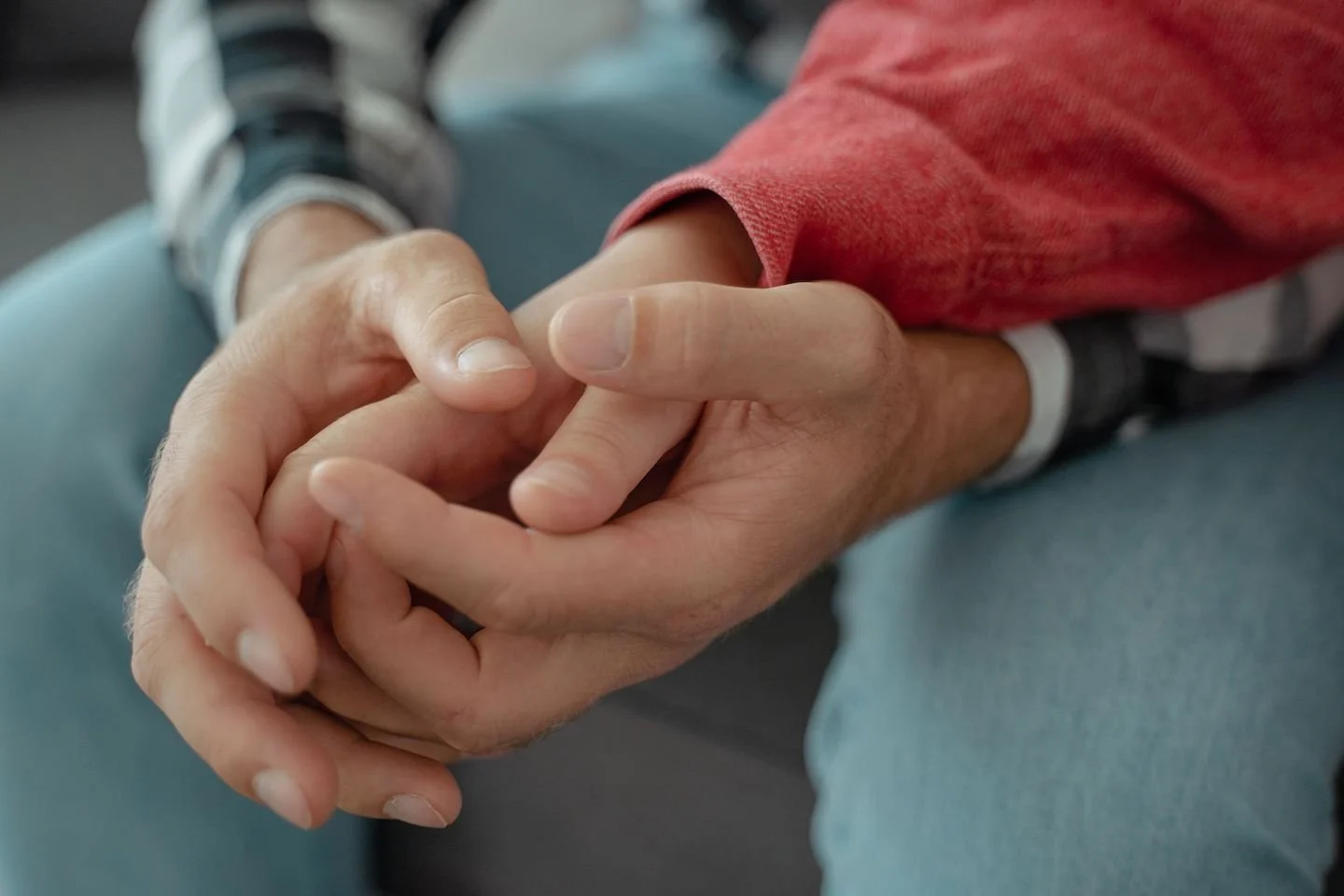
Physical closeness can be one of the most misunderstood areas in a neurodiverse relationship. Some autistic people deeply want affection and intimacy but have strong sensory preferences regarding touch, pressure, smell, sound, pacing, or unpredictability. A qualitative study comparing autistic and non-autistic adults found that intimacy often becomes easier when people talk directly about comfort, meaning, and boundaries instead of relying on assumptions (Sala et al., 2023). In practice, that might mean discussing whether spontaneous touch is welcome, what kinds of affection feel calming rather than overwhelming, and how to signal “not now” without it implying rejection. When couples do not talk about this directly, both sides can get hurt fast. One person may feel unwanted. The other may feel invaded or pressured. Honest, specific conversations reduce shame and make intimacy safer.
Learn how to repair conflict before it gets too big.
Conflict repair matters more than conflict avoidance. Neurodiverse couples often need a more structured repair process. That may look like pausing when one partner is overloaded, returning later at a set time, and using simple language to walk through what happened. A helpful formula is: “What happened?” “What did I feel?” “What did I need?” “What would help next time?” This fits well with recommendations from the relationship-counseling literature, which emphasize autism-informed therapy, a non-deficit lens, and practical adaptations rather than treating autism itself as the problem (Stafford et al., 2023). Couples tend to do better when they treat conflict as a mismatch to be solved together, rather than as a moral failure by one partner.
Get support that understands autism.
One hard truth is that a lot of couples counseling has not historically been designed with autistic adults in mind. A scoping review of relationship-counseling recommendations found a major lack of empirical research on counseling specifically for couples involving autistic adults, but the studies that do exist agree on several points: therapists need real familiarity with autism, should avoid a deficit-based approach, and should help both partners build mutual understanding rather than trying to train one person into neurotypical behavior (Stafford et al., 2023). That means if a couple seeks therapy, it is worth asking whether the therapist understands sensory needs, shutdowns, masking, literal communication, and the double empathy problem. The wrong therapist can make a couple feel more defective. The right one can help both people finally feel translated.

What this looks like in everyday life
Navigating a neurodiverse relationship usually comes down to a handful of repeatable practices. Say things more clearly. Check assumptions faster. Let needs be different without turning difference into disrespect. Build routines for repair. Make room for sensory and processing differences. Do not expect mind-reading. Moreover, do not make one partner responsible for carrying all of the relational labor. Research across autistic adults’ romantic experiences points toward the same conclusion: relationships go better when they are built around explicit communication, mutual understanding, and individualized expectations rather than social scripts (Ciric et al., 2025; Sala et al., 2023; Yew et al., 2023).
Conclusion
A neurodiverse romantic relationship does not need less love. It usually needs more translation, more explicitness, and more flexibility. The healthiest version of this kind of relationship is not one where the autistic partner masks constantly or the non-autistic partner suppresses their needs. It is one where both people learn how the other works and build a shared system that respects both nervous systems. That takes effort, but the research suggests it is an effort worth making. When couples shift from blame to understanding, from assumptions to clarity, and from “normal” to “what works for us,” they have a much better chance of building something lasting and real (Milton, 2012; Stafford et al., 2023; Yew et al., 2023).
References
Ciric, T., White, L., Allison-Duncan, C., Maloney, E., & Gillespie‐Smith, K. (2025). 'It's quite difficult to put autistic relationships in a box': A qualitative exploration of romantic relationships in gender and sexually diverse autistic adults. Autism, 30(3), 682–694. https://doi.org/10.1177/13623613251407765
Milton, D. E. M. (2012). On the ontological status of autism: The 'double empathy problem'. Disability & Society, 27(6), 883–887. https://doi.org/10.1080/09687599.2012.710008
Sala, G., Hooley, J., Hooley, M., & Stokes, M. A. (2023). Comparing physical intimacy and romantic relationships of autistic and non-autistic adults: A qualitative analysis. Journal of Autism and Developmental Disorders, 54(10), 3942–3951. https://doi.org/10.1007/s10803-023-06109-0
Stafford, A. (2023). Relationship-counselling recommendations for partnerships involving autistic adults: A scoping review. Psychotherapy and Counselling Journal of Australia, 11(1). https://doi.org/10.59158/001c.77496
Yew, R. Y., Hooley, M., & Stokes, M. A. (2023). Factors of relationship satisfaction for autistic and non-autistic partners in long-term relationships. Autism, 136236132311602. https://doi.org/10.1177/13623613231160244
